
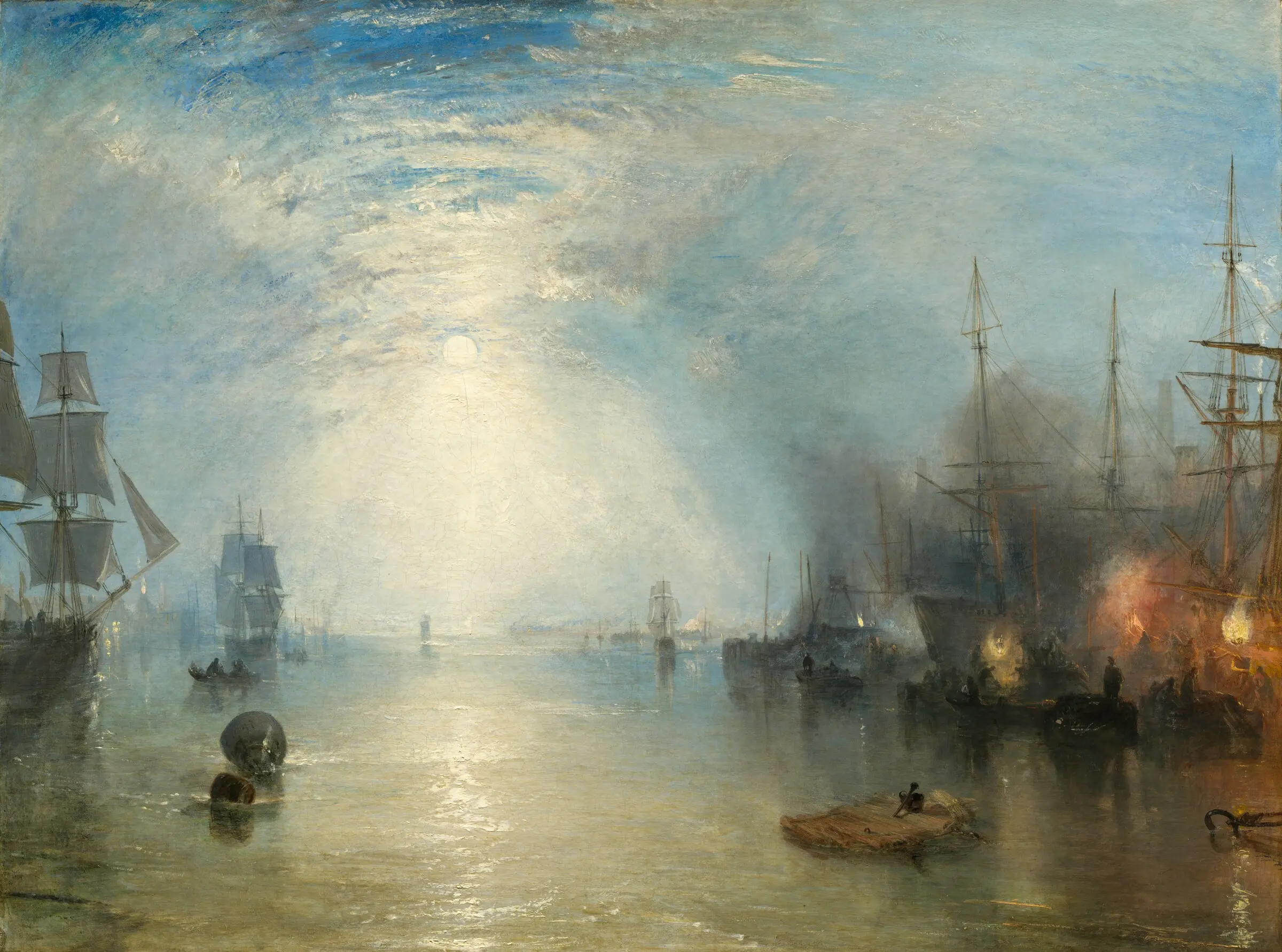
Art has never been separate from the practical parts of my life. A museum can restore a sense of proportion and peace that is difficult to find amid the demands of work. A painting or sculpture can hold attention without asking for an immediate decision. It creates room to look, to return and to notice what was missed the first time.
That is not an escape from reality. It is another way of attending to it.
Art trains the imagination; judgement disciplines it; strategy applies it to reality.
What makes me stop
Rodin always brings me peace.
The first works I encountered were The Age of Bronze and The Thinker, and I have admired Rodin’s work ever since. The Thinker remains especially important to me, together with The Fallen Caryatid Carrying Her Stone and The Kiss.
I first encountered The Fallen Caryatid not in a museum, but through Jubal Harshaw in Heinlein’s Stranger in a Strange Land. Jubal saw in her both pain and enduring struggle. The burden has brought her down, but the struggle has not ended. Several years later, on a family visit to the Musée Rodin, I saw her for myself. I could understand why Jubal was so enamoured of her. His reading was right; so was Rodin’s decision to give that pain and persistence physical form.
Each shows thought, imagination, craft and patience. The Thinker gives thought a physical form: concentration is not passive, but muscular and demanding. The Fallen Caryatid makes pain and enduring struggle visible. The Kiss is intimate without being slight; its figures possess weight, yet appear to move towards one another.
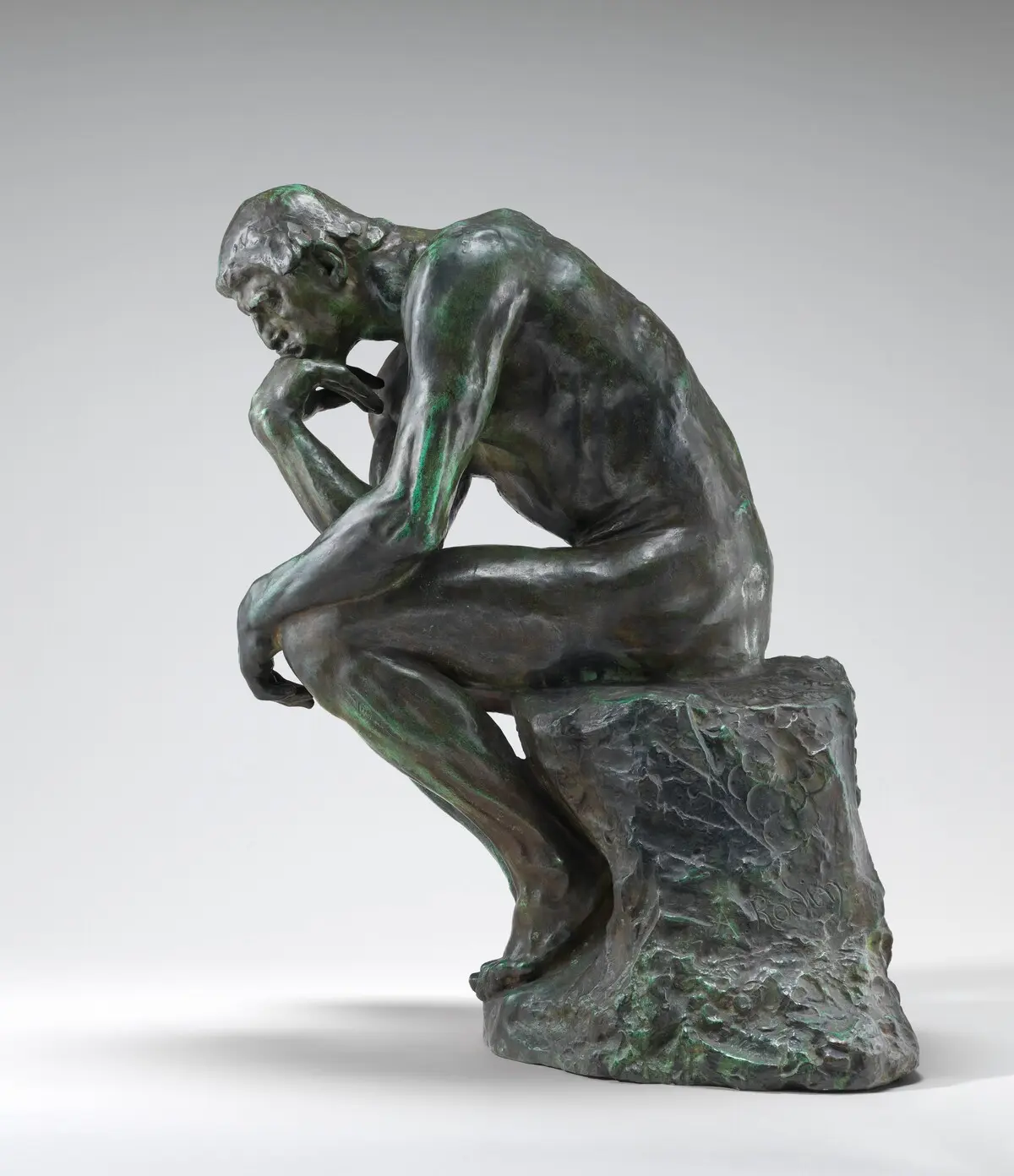
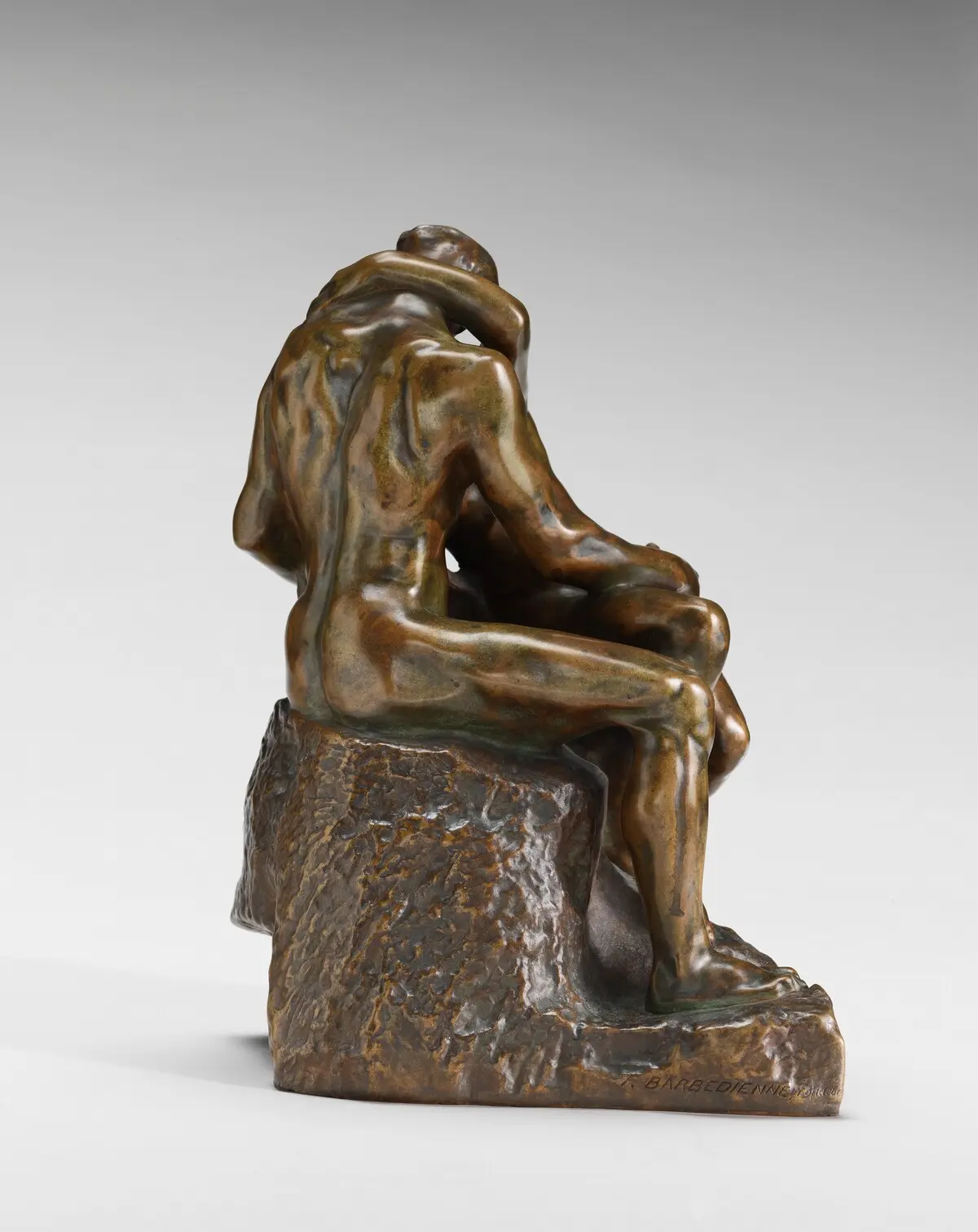
The familiar image of a sculptor releasing a figure trapped inside a block of stone captures something of what I value. Rodin often worked by modelling clay or plaster before a piece was cast in bronze, while marble versions were carved in his studio from his models. Yet the essential act remains: perceiving a form before others can see it, then applying the skill and patience needed to make it present.
I am drawn to work in which thought, craft and intention have been applied until the result appears inevitable.
In painting, I return to Turner, Constable and Gainsborough. Turner can dissolve the solid world into light, atmosphere and movement without losing its emotional force. Constable makes us attend to landscape as a place lived in, not merely viewed. Gainsborough could bring landscape, character and social presence into the same frame. These are very different achievements, but each rewards attention.
The important thing is not that these works are famous. It is that they continue to disclose something. Familiarity does not exhaust them.
My response to photography is different. I can appreciate the beauty, patience and technical skill involved in capturing wildlife or an extraordinary scene, yet photography as art usually leaves me cold. Much of the work in Tate Modern has a similar effect: some of it appears to me messy or hastily assembled. Then, occasionally, a work makes me stop and ponder.
That distinction matters. It is a personal judgement, not a universal sentence. Reputation may tell me that something is important; it cannot require me to be moved by it. Equally, an initially unsympathetic encounter should not prevent a second look. Judgement requires both independence and the possibility of revision.
Interpretation is not achievement
Ballet and theatre make the role of judgement particularly clear. A classic work is not a fixed museum object. Every production must interpret it.
I have seen The Nutcracker and The Red Shoes delivered very differently by different theatres. Two productions can depart from one another in staging, movement, emphasis and mood; both can be excellent, and both can be boring. Novelty alone does not make an interpretation creative, just as fidelity alone does not make it alive.
The score, story and inherited form establish constraints. Within them, a producer must decide what to reveal, what to withhold and how to make the familiar newly present. The quality lies in the application of thought—not simply in making visible changes.
This is one reason art has relevance far beyond the gallery or stage. Interpretation is unavoidable wherever inherited forms meet changing circumstances. The question is whether an interpretation illuminates its subject or merely advertises the interpreter.
Learning to judge
Sir Roger Scruton supervised my study of philosophy for three years. His influence on my understanding of aesthetics was substantial, but it did not take the form of a prescribed list of works one was obliged to admire.
What endured was a more demanding proposition: aesthetic judgement is neither a reflex nor a status signal. It begins in attention and must be capable of reasons. Beauty is not made trivial by giving pleasure. Tradition is not a cage; it is a body of inherited knowledge within which acceptance, adaptation and rejection can acquire meaning.
That provides a useful defence against two equal errors. One is to accept a work because institutions have certified it. The other is to dismiss it merely because it is unfamiliar. Independent judgement requires us to look before borrowing either admiration or contempt from someone else.
It also explains why art can contribute to peace of mind. The encounter is not passive consumption. Attention is gathered, distractions recede, and the mind is briefly ordered around something worthy of contemplation.
The artist, the soldier and the strategist
The connection between imagination and action formed much earlier.
Long before military service, I read widely: adventure stories, detective fiction, science fiction and philosophy. Analog arrived each month, although only after my father had read it. Heinlein, van Vogt, Christopher Anvil and Gordon R. Dickson were among the writers who helped form the intellectual landscape in which I first considered systems, consequence and human choice.
Dickson’s Tactics of Mistake stayed with me in particular. Its central figure, Cletus Grahame, describes a progression from artist to soldier to academic. He intends to write a great body of work on military art and science, but first has to create—and test—the conditions in which his ideas will apply.
The thought lodged. Imagination was not the opposite of practical judgement. It could be trained, tested against events and used to recognise possibilities before they became obvious. Theory acquired authority through contact with reality.
Military activity contains many sciences: logistics, communications, ballistics, intelligence and the measurement of time and distance. Command, however, remains an art. Combat cannot be repeated under controlled conditions with every variable held constant. People learn, conceal, improvise and act on incomplete information. Chance intervenes. The opposing commander has a mind and a map of his own.
Disciplined imagination enables us to perceive another person’s map without mistaking it for the territory.
In Iraq, I found that I could reconstruct a terrorist commander’s perspective closely enough to predict likely targets and routes. This was not intuition without evidence, still less anything mystical. It meant asking a different set of questions of the available reporting: Where would I conceal people and material? Which target would serve the purpose? Which routes were feasible? How would time, terrain, borders and logistics shape the decision?
The answers were hypotheses. Geography, timing, behaviour and subsequent events tested them. I was largely right because the imagination was disciplined by observable constraints—and because I was willing to revise the picture when reality supplied something new.
The map must remain provisional
The same principle applies in an enterprise. A briefing is a representation of the organisation, not the organisation itself. I test whether the available evidence forms a coherent route from the present position to the intended outcome. Gaps, contradictions and unsupported transitions indicate where inquiry should begin.
There are always blank spaces. Some are immaterial; others will later change the route. New evidence may alter the next decision, reveal an omitted actor or show that an assumption was never true. The appropriate response is not to defend the original plan for the sake of appearing consistent. It is to preserve the purpose while adapting to the territory.
Moltke’s observation that no operational plan extends with certainty beyond first contact is commonly paraphrased as, “No plan survives contact with the enemy.” I use a broader version:
No plan long survives contact with reality.
“Long” matters. A plan may remain useful initially, but events progressively expose assumptions, omitted actors and changing conditions. Reality—not merely an enemy—includes markets, institutions, incentives, evidence, timing and chance.
No plan long survives contact with reality. The objective may endure; the route must adapt.
Changing the route is sometimes mistaken for uncertainty. It should instead make the decision process more explicit: what changed, which assumption has been invalidated, what remains fixed and what objective comes next?
Consistency means fidelity to the objective and to reality—not to a route the territory has already rejected.
This is not an argument for improvisation without control. Objectives, authority, constraints and decision rights provide the discipline within which adaptation is possible. Strategy does not abolish uncertainty. It creates a structure within which people can continue to act intelligently as the situation changes.
Art as capital
Art should not be reduced to an asset class. A price may be necessary to a transaction, but it cannot account for why a work matters.
Nevertheless, art can hold and create several forms of value at once:
- financial, as an owned and exchangeable asset;
- cultural, through knowledge and participation;
- relational, through shared experience and patronage;
- intellectual, through interpretation and learning; and
- symbolic, through provenance, recognition and association.
A collection can preserve memory, establish continuity, support institutions and create encounters between generations. A shared visit to a gallery, ballet or theatre may become part of a family’s common language. The judgement involved in forming, interpreting and stewarding a collection is itself a capability.
This is where art belongs within the Six Capitals framework—not as ornament, but as a form of attention, inheritance and stewardship. Its value may be realised financially, but it is not exhausted by finance.
The same is true personally. The works I return to do not offer instructions for running an organisation or conducting a campaign. They train a more fundamental capacity: to look closely; to distinguish intention from effect; to recognise that inherited forms can support new interpretations; and to hold more than one possible reading in mind before choosing how to act.
Art contributes to peace of mind, but it also strengthens judgement. It reminds us that imagination without discipline becomes fantasy, discipline without imagination becomes repetition, and strategy without either becomes a plan already waiting to fail.
Art trains the imagination; judgement disciplines it; strategy applies it to reality.